

Why Carbon Capture Exists Financially
An in-depth analysis of the financial engine driving carbon capture and sequestration (CCS) in Louisiana.
1. Follow the Money
The Financial Engine Behind Carbon Capture and Sequestration
Carbon capture and sequestration (CCS) projects are often presented to the public as environmental initiatives designed to reduce greenhouse gas emissions. While environmental goals are frequently emphasized, the rapid expansion of carbon capture infrastructure across the United States is also driven by a complex financial framework built around federal tax credits, carbon markets, energy subsidies, infrastructure fees, and global climate finance.
Understanding how money flows through this system helps explain why energy companies, industrial corporations, financial institutions, and investment funds are investing billions of dollars into carbon capture development.
At its core, the CCS industry is built on a financial model in which every ton of carbon dioxide captured can generate multiple streams of revenue simultaneously.
Those revenue streams can include:
- Federal tax credits
- Carbon credit markets
- Enhanced oil recovery profits
- Pipeline transportation fees
- Low-carbon fuel incentives
- State tax subsidies
- ESG investment capital
When these incentives are combined, the financial returns associated with large carbon capture projects can reach hundreds of millions — and in some cases billions — of dollars over the lifetime of a project.
2. Market TransformationHow Carbon Dioxide Becomes a Financial Commodity
Carbon dioxide is a naturally occurring component of the Earth's atmosphere and part of the global carbon cycle. Through modern climate policy and financial markets, however, carbon dioxide has increasingly been transformed into an economic commodity.
Under current regulatory and financial frameworks, the capture, transportation, and underground storage of carbon dioxide can generate multiple forms of financial value. Federal tax credits, carbon credit markets, and investment programs tied to emissions reduction have created a system in which captured carbon dioxide can produce revenue at several stages of the process.
"Instead of simply being treated as an industrial byproduct, carbon dioxide can now function as a tradable asset within a growing global carbon management economy."
Once carbon dioxide is captured from industrial facilities, it can move through a series of financial channels that generate income for project developers, infrastructure operators, and investment partners. These revenue streams may include federal tax credits, pipeline transportation fees, underground storage service payments, and the sale of carbon credits in emissions trading markets.
Because several of these incentives can apply to the same ton of captured carbon dioxide, the system allows companies to generate financial value multiple times from a single unit of captured gas. This layered financial structure is one of the primary reasons large energy companies, investment funds, and industrial developers are pursuing carbon capture and sequestration projects across the United States.
Understanding how carbon dioxide becomes part of this financial system helps explain the rapid expansion of carbon capture infrastructure and why certain regions—particularly states with existing industrial facilities and suitable geological formations—have become focal points for development.
3. Federal PolicyThe Origin of the Carbon Capture Subsidy System
3.1 The History of Section 45Q
The financial foundation of the modern carbon capture industry is Section 45Q of the U.S. Internal Revenue Code, commonly referred to simply as "45Q." The 45Q tax credit was originally created by Congress in 2008 as part of the Energy Improvement and Extension Act. At the time, the credit was relatively small and designed primarily to support experimental carbon capture technology and enhanced oil recovery operations. The original version of 45Q provided $10 per ton of CO₂ used for enhanced oil recovery and $20 per ton permanently stored underground.
3.2 Expansion Under the Bipartisan Budget Act of 2018
In 2018, Congress dramatically expanded the 45Q program as part of the Bipartisan Budget Act of 2018. The revised law significantly increased the value of the tax credit and extended its availability for new carbon capture projects, increasing incentives to approximately $35 per ton for CO₂ used in enhanced oil recovery and $50 per ton for CO₂ permanently stored.
Source: Congressional Research Service – Carbon Capture Tax Credit3.3 Further Expansion Under the Inflation Reduction Act
The most dramatic expansion of 45Q occurred in 2022, when Congress passed the Inflation Reduction Act (IRA). The IRA significantly increased the value of carbon capture incentives and expanded eligibility for new projects. Under the updated system, qualifying projects can receive:
- $85 per metric ton for CO₂ permanently stored
- $60 per metric ton for CO₂ used in enhanced oil recovery
- Up to $180 per metric ton for direct air capture projects
3.4 Example: Federal 45Q Revenue Potential
| CO₂ Stored/Year | Credit Rate | Annual Federal Revenue | 12-Year Total |
|---|---|---|---|
| 500,000 tons | $85 per ton | $42.5 million | $510 million |
| 1 million tons | $85 per ton | $85 million | $1.02 billion |
| 5 million tons | $85 per ton | $425 million | $5.1 billion |
| 10 million tons | $85 per ton | $850 million | $10.2 billion |

4. Turning Tax Credits Into Cash
Although 45Q is structured as a tax credit, federal policy allows companies to convert these credits into immediate financial value. Developers can monetize the credit through direct pay, transferability, or tax equity financing.
Source: U.S. Treasury – Elective Pay and TransferabilityExample: If a facility generates $100 million in 45Q credits, the developer may sell those credits to an investor for roughly $85–$95 million in cash, providing immediate financing for project construction.
5. ESG Investment Capital
Another major financial driver behind carbon capture development is the global expansion of Environmental, Social, and Governance (ESG) investing. Large investment funds increasingly evaluate companies based on climate-related performance. Companies investing in carbon capture may gain access to climate-focused investment funds, sustainability-linked financing, and lower borrowing costs.
Source: Bloomberg Intelligence – ESG Market Outlook6. Carbon Credit Markets
Captured carbon dioxide can also generate value in carbon credit markets, where companies purchase credits to offset their emissions.
| Carbon Price | 1 Million Tons CO₂ | 5 Million Tons CO₂ |
|---|---|---|
| $10 per ton | $10 million | $50 million |
| $25 per ton | $25 million | $125 million |
| $50 per ton | $50 million | $250 million |
| $100 per ton | $100 million | $500 million |
7. Pipeline Transportation Fees
Carbon capture networks require pipelines to transport CO₂ from capture facilities to underground storage sites. Pipeline operators may charge transportation fees per ton of CO₂ transported.
| CO₂ Transported | Fee per Ton | Annual Pipeline Revenue |
|---|---|---|
| 1 million tons | $5 | $5 million |
| 1 million tons | $15 | $15 million |
| 5 million tons | $10 | $50 million |
| 10 million tons | $10 | $100 million |
8. Enhanced Oil Recovery Revenue
Historically, most carbon dioxide pipelines in the United States have been used for enhanced oil recovery (EOR). In this process, CO₂ is injected into aging oil reservoirs to push additional oil toward production wells. Projects may receive both oil revenue and federal 45Q tax credits, creating two revenue streams at once.
| CO₂ Injected | Additional Oil Produced | Oil Price | Estimated Revenue |
|---|---|---|---|
| 1 million tons | 2 million barrels | $75/barrel | $150 million |
| 1 million tons | 3 million barrels | $75/barrel | $225 million |
| 5 million tons | 10 million barrels | $75/barrel | $750 million |
9. State and Local Incentives (Louisiana ITEP)
In addition to federal incentives, carbon capture projects may also receive state and local subsidies. In Louisiana, companies may qualify for the Industrial Tax Exemption Program (ITEP), which can significantly reduce property taxes for large industrial investments.
| Project Investment | Estimated Property Tax | 80% ITEP Reduction | Annual Tax Savings |
|---|---|---|---|
| $500 million | $5 million | $4 million | $4 million |
| $1 billion | $10 million | $8 million | $8 million |
| $2 billion | $20 million | $16 million | $16 million |

10. IntegrationThe Stacked Revenue Model
Carbon capture projects often combine several financial incentives at once.
For large projects capturing 5–10 million tons of CO₂ per year, the combined financial value of these incentives can reach hundreds of millions—or even billions—of dollars annually.
11. How One Ton of CO₂ Generates Profit at Every Step
From a financial perspective, each ton of carbon dioxide captured can generate value multiple times as it moves through the carbon capture system. The same ton of CO₂ can produce revenue at several stages of the process.
Step 1 — Carbon Capture
Industrial facilities capture CO₂. It becomes an asset under 45Q, matching up to $85/ton.
Step 2 — Pipeline Transportation
Pipeline operators charge transport fees per ton ($5 to $15).
Step 3 — Carbon Storage Services
Companies owning storage sites charge industrial emitters service fees to permanently dispose of their CO₂.
Step 4 — Carbon Credit Markets
Projects generate credits in voluntary markets where companies purchase offsets.
Step 5 — Enhanced Oil Recovery
CO₂ is injected into oil reservoirs to multiply oil production.
12. When These Revenue Streams Are Combined
Because multiple incentives can apply to the same ton of carbon dioxide, the total financial value associated with carbon capture can be significant.
When combined, the total financial value associated with one ton of carbon dioxide can reach $300 to $500 or more, depending on the project structure and market conditions.
Why This Matters
The system is designed so that every ton of carbon dioxide moving through the network can generate financial value multiple times, creating a powerful economic incentive to build capture facilities, pipelines, and underground storage hubs.
13. Scale & PerspectiveWhat $1 Billion in Carbon Capture Subsidies Looks Like
The scale of financial incentives supporting carbon capture projects can be difficult to visualize. Numbers such as "billions of dollars" often appear abstract, but those funds represent real economic resources that could otherwise flow into communities, public infrastructure, or local industries.
14. Public Services Comparison
A billion dollars is large enough to fund major public investments. For example, $1 billion could fund approximately:
- 20,000 public school teachers for an entire year at an average salary of $50,000
- Major highway construction projects across multiple parishes
- Hundreds of rural bridge repairs and replacements
- Hospital infrastructure upgrades across the state
Public infrastructure and public services often depend on tax revenues generated by local industries. When large industrial projects receive long-term tax exemptions, it shifts how resources are allocated.
15. Natural Resource Comparison
Many existing industries in Louisiana generate economic value comparable to — or smaller than — the financial incentives offered to individual carbon capture projects.
| Industry | Annual Economic Value |
|---|---|
| Louisiana Crawfish | ~$250 million |
| Louisiana Rice | ~$500 million |
| Louisiana Fisheries | ~$1.3 billion |
| Louisiana Nursery | ~$2.5 billion |
| Louisiana Forestry | ~$11–13 billion |
16. Comparing One Large CCS Project
A single large carbon capture project capturing 5 million tons of CO₂ per year could generate:
| Revenue Source | Estimated Annual Value |
|---|---|
| Federal 45Q Tax Credits | $425 million |
| Carbon Credit Sales | $125 million |
| Pipeline Transportation Fees | $50 million |
| Enhanced Oil Recovery Revenue | $750 million |
| State Tax Incentives | $16 million |
| Estimated Annual Total: | ~$1.36 billion / yr |
Over a 12-year federal credit period, the federal tax incentives alone could exceed $5 billion.
17. Why These Comparisons Matter
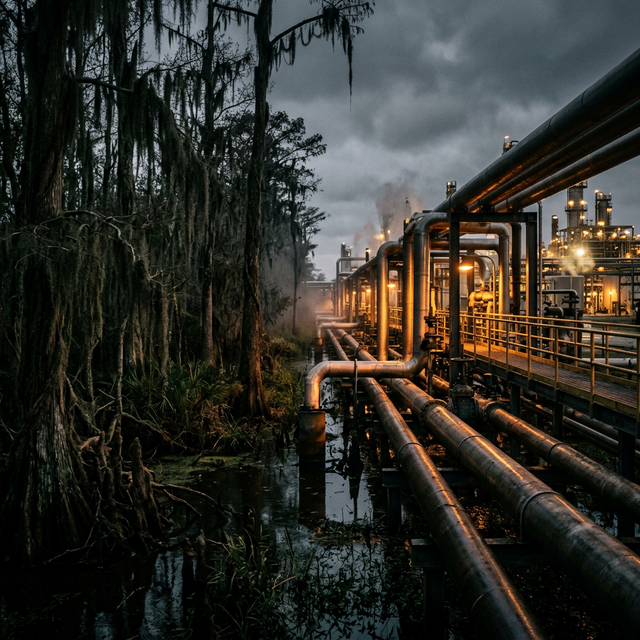
Carbon capture projects represent some of the largest industrial subsidies in modern energy policy. At the same time, the physical infrastructure—pipelines, compressor stations, and underground injection wells—must be located within Louisiana communities and landscapes that support agriculture, forestry, fisheries, and other natural resource industries.
18. The Broader Economic Question
"How should the state balance the financial incentives offered to large industrial developers with the long-term protection of existing industries that depend on Louisiana's land, water, and natural resources?"
19 - 21. Mechanism & RiskProfit Models and Risk Distribution
19. The Stacked Profit Model
One of the reasons carbon capture projects attract significant investment is that multiple revenue streams can be layered on top of each other. A single ton of captured carbon dioxide can generate value in several ways at once.
20. Example Financial Stack for a Large CCS Project
Assume a project captures 5 million tons of CO₂ per year. Potential Annual Revenue equates to approximately $1.36 billion per year. These figures illustrate why carbon capture development has expanded rapidly following the increase in federal incentives.
21. Who Profits — and Who Carries the Risk?
Understanding the financial incentives also requires examining the other side of the equation. While large industrial developers may receive federal subsidies, tax incentives, and carbon market revenue, the physical infrastructure required to support these projects is located within real communities, across private land, and above critical natural resources.
This creates an important policy question: who benefits financially from carbon capture infrastructure, and who bears the long-term risks and potential costs if problems occur?
22. Focus on LouisianaLouisiana: The Emerging Epicenter of Carbon Capture Profits
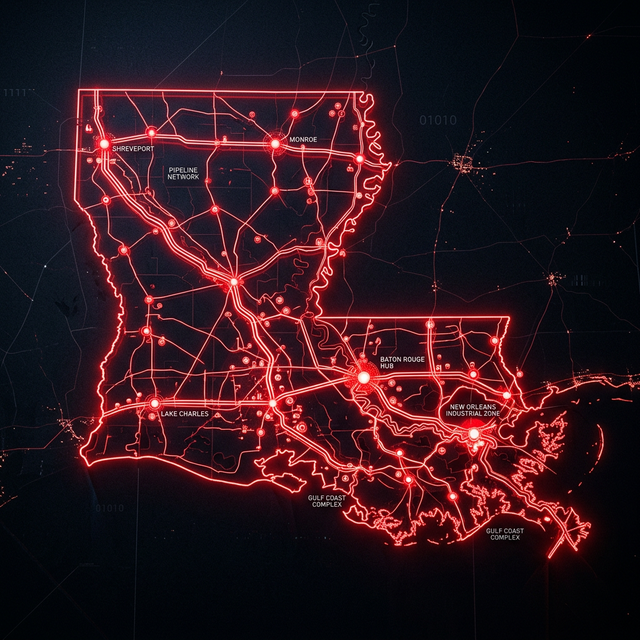
In recent years, Louisiana has rapidly become one of the primary targets for carbon capture and sequestration development in the United States. While projects are proposed across several states, the concentration in Louisiana is significantly higher.
Louisiana possesses extensive deep geological formations that industry believes may be suitable for underground carbon storage. The state also has one of the largest concentrations of refineries, chemical plants, LNG export terminals, fertilizer plants, and other heavy industrial facilities in North America.
23. The Scale of Proposed Carbon Storage in Louisiana
According to filings submitted to the Louisiana Department of Energy and Natural Resources, dozens of carbon sequestration projects involving more than one hundred proposed injection wells have been announced or submitted for regulatory review across multiple parishes.
Source: LA Dept. of Energy and Natural ResourcesParishes currently associated with CCS project proposals include:
- Allen Parish
- Ascension Parish
- Assumption Parish
- Beauregard Parish
- Calcasieu Parish
- Caldwell Parish
- Cameron Parish
- Iberville Parish
- Livingston Parish
- Pointe Coupee Parish
- Rapides Parish
- Sabine Parish
- St. Charles Parish
- St. Helena Parish
- St. John the Baptist Parish
- Vermilion Parish
- Vernon Parish
- W. Baton Rouge Parish
24. Estimated Revenue Potential
When the federal incentives, carbon credit markets, and infrastructure revenues discussed earlier are applied to the scale of projects proposed in Louisiana, the financial magnitude becomes clear. Over a 12-year credit period, a single project of 5M tons/year could generate more than $5 billion in federal tax incentives alone.
25. What the Statewide Financial Picture Could Look Like
If multiple projects move forward, the combined scale could become enormous. Assume 10 major projects operate, each storing 5 million tons of CO₂ per year:
26. Why Louisiana Has Become the Target
The combination of Industrial Carbon Supply (refineries, LNG terminals), Geological Storage Formations (deep saline formations), Existing Energy Infrastructure (pipelines), and Federal Incentives (expansion of 45Q) have created a powerful incentive structure encouraging companies to pursue projects across Louisiana.
27. Public Subsidies Supporting Private Projects
These incentives are funded through the federal tax system and represent a form of public subsidy intended to encourage carbon capture development.
28. Local Governments and Lost Tax Revenue
While state and parish governments often provide additional incentives like ITEP, they also reduce local tax revenues that support public services. This shrinks funding for schools, law enforcement, fire protection, and roads, shifting the burden toward other taxpayers within the community.
29. Landowners and Property Rights
Carbon capture infrastructure often requires access to large areas of land. These projects affect landowners through pipeline easements, land use restrictions, and uncertainty surrounding subsurface property rights. In some cases, companies may seek to use eminent domain authority.
30. Long-Term Liability Questions
Projects store CO₂ underground for centuries, raising questions over responsibility for long-term monitoring. In some regulatory frameworks, responsibility may eventually transfer to the state, meaning future remediation costs could fall on public agencies or taxpayers if problems emerge decades later.
31. Economic Exposure for Natural Resource Industries
Louisiana's natural-resource economy (agriculture, forestry, crawfish, fisheries, nurseries) collectively represents billions of dollars annually. If environmental changes affect groundwater or wetlands, these industries face profound economic impacts.
32. Risk Concentration
A key concern is that the financial rewards are distributed broadly, while physical infrastructure and environmental exposure are concentrated locally. This means that host communities experience the greatest direct exposure.
| Revenue Stream | How Revenue Is Generated | Potential Area of Economic Exposure |
|---|---|---|
| Federal 45Q | Up to $85/ton stored for 12 years | Federal taxpayers fund the incentive |
| Carbon Credit Markets | Companies sell credits to corporations | Local ecosystems host the infrastructure |
| Enhanced Oil Recovery | CO₂ injected increases oil production | Oil extraction occurs within specific regions |
| Pipeline Transport Fees | Operators charge fees per ton | Pipelines cross private land, forests, farms |
| Low-Carbon Fuel | Captured CO₂ allows fuels to qualify for credits | Industrial facilities near communities |
| ESG Investment Capital | Projects attract sustainability funds | Long-term monitoring in local jurisdictions |
| State Tax Incentives | ITEP reduces property tax obligations | Local governments receive reduced revenue |
| Storage Service Fees | Companies charge industrial emitters | Injection wells located within parishes |
33. Where the Money Goes vs. Where the Economic Exposure Occurs
Projects operate within a financial structure allowing multiple revenue streams. At the same time, the physical infrastructure—pipelines, injection wells, and monitoring systems—must be built within communities that support existing industries and natural resources.
34. A Defining Question for Louisiana's Future
The rapid expansion of carbon capture proposals raises an important question for Louisiana residents and policymakers. The decisions made today will influence Louisiana’s land use, water resources, and economic structure for decades to come. For many citizens, the question is not simply whether carbon capture technology will expand—but how the benefits, risks, and responsibilities associated with that expansion will be distributed.
35. Why This Financial Structure Matters
These incentives have created a powerful economic driver encouraging rapid expansion. Understanding this structure helps provide context for why carbon capture is expanding quickly and why Louisiana has become a focal point.
36. The Policy Question
"Should the state encourage large-scale carbon storage development through public incentives if the long-term environmental and financial risks are carried primarily by local communities, landowners, and natural-resource industries?"
Answering that question requires careful consideration of both the financial benefits and the potential costs associated with these projects. Understanding how money flows through the carbon capture system is an important step toward evaluating whether the long-term trade-offs align with the interests of Louisiana’s people, land, and economy.